Tuesday, December 19, 2006

Becoming Men

This is one incident from my school days which I remember vividly. I was in XII at that time.

Being the senior most class in the school, we all used to be very smug and sometimes even haughty. Except for one teacher or may be two, we had good relationships with all our teachers. It used to be a very friendly but hyper-charged environment in the class during those crazy days of studies and preparations for board exams.

A male teacher whom I would call 'A' sir was our class teacher. A sir was a popular teacher among senior school students and even more popular among the alumni of the school. I liked him too. He taught us English.

I was a volunteer for the school assembly which means I helped junior students get in line during the assembly and morning prayers. My duties also included helping the class monitors check their classmates for proper uniforms, particularly on Saturday which was the P.T. day. I took my duties as a volunteer a bit too seriously. I used to be very strict and took deep pride in wearing the badge

That year we had a new principal whom I would call Sister B. She had a panache of organizing some or other extracurricular activity every weekend. It didn't matter even if we had exams Not that it was bad, we used to enjoy them but as the term progressed, she went overboard with her innumerable social and cultural and god knows what events.

We had just finished with the annual cultural event at the school and now the board exams were fast approaching. We were all in the mood of serious studying. Just then the principal came with the idea of having a 'moral-value exhibition' that weekend. Only with her it was not an idea and we all had to simply cooperate. She had already made up her mind and nothing would make her change it.

In the class we had a heated discussion with A sir about the exhibition and even he was of the opinion that this exhibition was frivolous and we could all do without it. I was so opposed to the idea that I decided to resign from being a volunteer as a token of protest. I figured that was the only way in which I could let my opposition known to the principal.

After the lecture I went to A sir and took out my badge and gave it to him. I no longer wanted to be a volunteer. I was willing to let go of a job which I so dearly loved and which was a matter of pride for me. It was then that A sir talked to me. He told me he knew how much I valued my volunteer's badge and he told me he knew my feelings. He told me that even he was not in the favor of the exhibition but he was contributing to it nonetheless. It was a simple matter of obeying your superiors. Therefore, I should also take a part.

I did take a part in the exhibition and the event was a success. The chairman of the municipality was the chief guest and he was impressed by the show. Funny I remember these details.

What is not funny that I remember that day as when I became an adult. In those few minutes when I was talking to A sir, I was transformed from a boy to a man. He made me understand a very simple fact of life:


"....Courage to change the things I cannot accept and humility to accept the things I cannot
change..."


I am indebted to him for the rest of my life.

Huzefa
Sunday, November 19, 2006

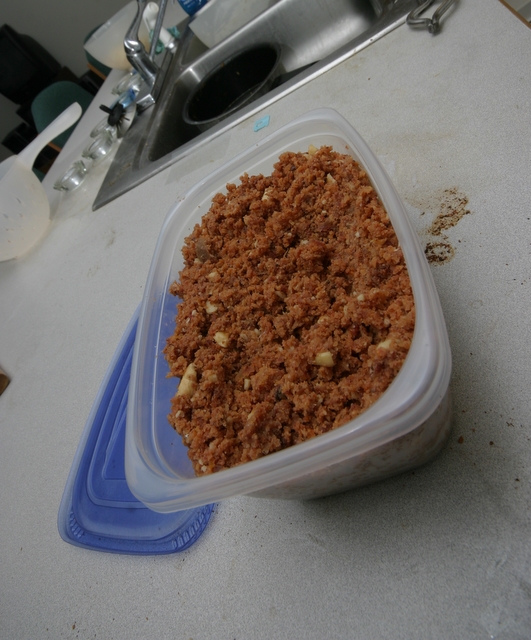
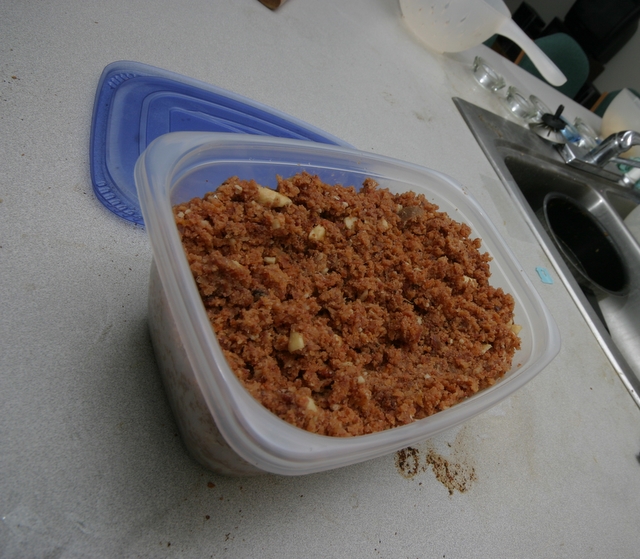
Kharak No Halwo

You require:
Kharak (dry dates): 500 gms, Milk: about a liter, Ghee (clarified butter): about 300 gms, Condensed milk: 200 ml, sugar: very little, about 3-4 tbsp

Servings: about 12-15 (enough for one week :-) )

Preparation time: lots

Preparation:

  1. Soak the kharak in milk for about 24 hrs. Kharak will absorb most of the milk and will swell due to it.
  2. One by one, remove the seeds from the swollen kharaks. This will be pretty quick as kharak will be pretty soft after soaking.
  3. Grate this seedless kharak in a mixer-grinder. Don't grate very finely, but just enough so that no big pieces are visible.
  4. Take the grated kharak in a pot, preferably non-stick. The pot should be big enough for easy stirring.
  5. Add about half of the ghee and cook on high flame for about 5 mins with constant vigorous stirring.
  6. Lower the flame and add condensed milk and the remaining ghee. Stirring should not be stopped.
  7. Cook on a low flame (not lowest) for about 30-35 mins till the mixture turns a thick brown in color. If you find kharak sticking to the bottom, add more ghee and stir. Remember, stirring is the key.
  8. After 30 mins or so, the halwa is ready, taste for sugar and add according to taste.
  9. From here, continue cooking on a lower flame for a few more mins if you want your halwa soft or you could turn off the flame right away.
  10. Garnish with cashew nuts or some other dry fruit.
  11. Eat and stove the rest in refrigerator.

Generation Gap- Revisited

This is in part, a continuation of my previous post. In family matters Coomy treats her step-father- Nariman Vakeel very shabbily. One of the reasons is that Nariman became her step-father at the late age of 11, so she didn't have the child-father feelings for her. But the major reason was that though Nariman had married Yasmin, he could not forget Lucy which was the woman he loved. Lucy was always there in his mind and he had not accepted his married life whole-heartedly. He went to such lengths to meet Lucy which would be considered nothing short of scandalous. Chaeteu felicity was constantly strained- so were Nariman's relations with the family.

What child could be expected to love her father if she cannot respect him. It is possible for adults to love someone in spite of shortcomings; but for children it is a different case. Children see in their father a man who is perfect, who is all powerful, who can do nothing wrong and who is the answer to all their questions. But when parents fight and children watch them abusing and hitting each other, it is the children who suffer. The image of perfect parent is shattered. Forever.

Coomy draws her hatred from this. Nariman, on his part does not make any conscious effort to build the bridges with his children which he is intentionally or otherwise burning. Coomy holds Nariman responsible for her mother's death. Anyone in Coomy's position would do that. With this past, can Coomy be expected to nurse her bed-ridden step-father? One would say that time heals, so Coomy would also forget the past and become friends with Nariman. But she does nothing of the sort. She is too human for that. And fate treats her appropriately in the end but that is a different story.

Please read this summary before proceeding:

"Story of Pao" is the most critically acclaimed film produced in Vietnam
during 2006. It centers on a young girl, Pao, a member of an ethnic
minority group living in the Vietnamese highlands. By recalling Pao's
memories of her parents and their emotional life, the film deftly explores
the concept of love from different points of view." Courtesy: Christina Skourou

In stark contrast to Coomy is Pao. The woman whom Pao's father married could not conceive. Her infertility was almost a curse in the highlands. So Pao's father brought home another woman- Mrs Kim who bore Pao and her younger brother. Mrs Kim would not live with Pao, instead she left them all after living with them for a short while. Pao grows up resenting the presence of Mrs Kim in the house. She is oblivious to the fact that Mrs Kim lover her father too much to live with them.

Pao falls in love with a guy from the local market. Let us call this guy A. Shortly after Pao finds that Pao's mother (not Mrs Kim) loves A's father. This discovery shatters Pao and she becomes more and more withdrawn. The mother, with her conscience heavy, disappears under mysterious circumstances. Pao's father and the rest assume she has died. The death affects Pao's father badly and he takes to drinking heavily. Pao's world is disappearing in front of her eyes. What does she do?

She decides to find and bring Mrs Kim, her biological mother back- for her father. Not for her and not for her brother but her sick and weak father. She is gone from her home for weeks and faces many difficulties but she is finally able to track Mrs Kim; only to find out that she is living with another man. Defeated and hopeless, she prepares to return to her village- empty handed. While returning, she finds that her mother who is living with A's father. She had not died. But escaped with her love!

When Pao reaches home, she finds Mrs Kim nursing her ailing father.

This is the power of love. It was love which made Pao's mother run away with A's father and it was love which made Mrs Kim return to Pao's father. Pao never tells her father the truth about her mother . This is the difference between Coomy and Pao. Pao could forgive, Coomy could not.

On a different note, If Nariman had defied his parents and married Lucy.. if....

Huzefa

Saturday, November 18, 2006

Family Matters

I just finished reading Rohinton Mistry's Family Matters. At first when I picked up the book, I had tried figuring out the phrase 'family matters' as in the matters of the family or the importance of family. I think its the latter, that the author wanted to say.In his own style of writing which contains a lot of dialogue and use of a simple language mixed heartily with Parsi and Gujarati and Hindi words, Rohinton Mistry has written a beautiful novel.

I think of the Parsis and the image which comes to my mind is an old man- a little eccentric bt very amiable and one who always loves children, of a cranky woman swearing gadhera, gaanda. Guess what! both these characters and some more are present in Family Matters. The novel explores the importance of family in the lives of an old man who is suffering from Parkinson's, his step-children, his daughter and her family. The characters are all very realistic and their life in Bombay- all too easy to connect with.

Money isn't the solution to all of man's problems. It is not the final destination but the journey wherein lie the little joys of life. Yezaad is barely able to make the ends meet with his meagre salary and when his father-in-law suffering from Parkinson's is forced into his house, it becomes a strain for everybody in the house. Toast without butter, meals without meat, a bath on alternate days- such things. But this hardship brings the family closer than ever. All members pitch in-even Yezad's 9 and 13 year old sons.

Jehangir in the epilogue says he misses his old father- one who used to laugh, get angry, shout at him used to tell jokes. Now, he is not the same man. This is when they are living much more comfortably than before- in the seven-room chateau felicity home. A man never learns from his mistakes. I couldn't help feeling this way towards the end. Children become adults and their parents feel something slipping out of their hands.

I say it is wrong in the first place to hold on to them.

Huzefa

Saturday, November 4, 2006

Rizq

Rizq is an Arabic word. It roughly means your share in God's scheme of things. To use it in a sentence, I could say my rizq is in America. Most commonly it is understood in terms of food and water which a person consumes. Think of "daane daane pe likha hai khane wale ka naam". Yes, you get it.

My name as it turns out has been written on $3.49 loaves of bread, $4.59 a pound tomatoes, 12-can packs of sprite, tins of pringles, packets of chicken and on Indian spices, of course. I was a little worried about the food initially but at the same time I was looking forward to cook my own meals too.

It seems to me that during the first month, I was having a 'beginners' luck'. Nothing could go wrong with my cooking. Whether it was the chicken drumsticks or mince-meat or aloo-gobhi- everything I cooked was edible and easily digestible. I had kind of like 'settled in' and now that I was doing my own food, I could appreciate my tiffin in Indore better than ever.

But this last week has been a disaster in terms of my culinary (dis)abilities, whatever I have tried to cook has turned out to be a disaster. Semi-boiled chana dal, chicken thighs with all the skin and fat intact, scrambled eggs and potatoes you name it I've got it. I was ruining up big time on all my cooking. The saving grace was I had found a very good pizza delievery and savored their offerings for a while, then there was the dining hall in college.

Just today, I've prepared three dishes which I hope will last me the next week. I found a kind soul online while I was preparing and she guided me through the intricacies of rajma and moong-dal. I have all of that food now stored in the refrigerator.

It is important to eat your food. For me, it is a tie which connects me to all whom I have left behind. There is a joy in knowing that you are eating the same kind of food in a foreign land which your folks eat back home. When I wear a topi, wash hands and eat my meal with hands, the distances are bridged. Just like that.

According to my grandmother if our rizq and rozi is in a foreign land then we have to go and earn it there. Difficult as it might be but that is the way it is. I pray to God that I always respect and value my rizq. There are many in this world who don't even have two meals a day.

Faith,
Huzefa

Saturday, October 21, 2006

Diwali @ The Big Green

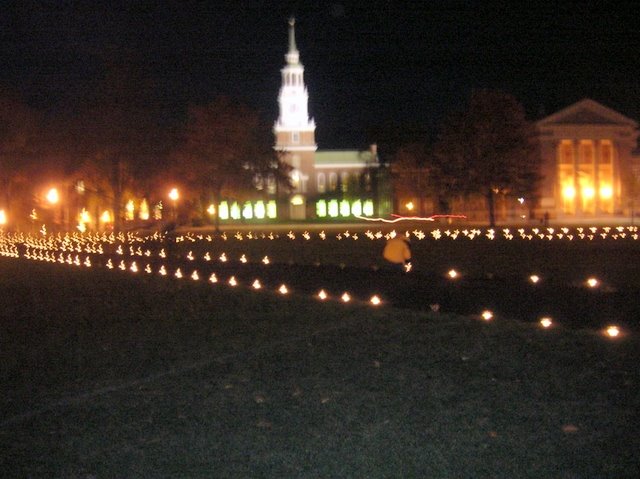
1500 Candles at the Big Green. In the background is the Baker Tower


Organiser of the celebrations- SHANTI- The Hindu student association of Dartmouth

This is the festival season back home and we all Indians are feeling a bit low for obvious reasons. But then the saving grace is that the festival fell on a weekend. To begin with there was Puja at the Rollins Chapel and I found it a little odd in the chapel. Not because I am not a Hindu, I mean I've been to temples in India and the atmosphere here was more relaxed. But then this is Diwali, the occasion of joy.

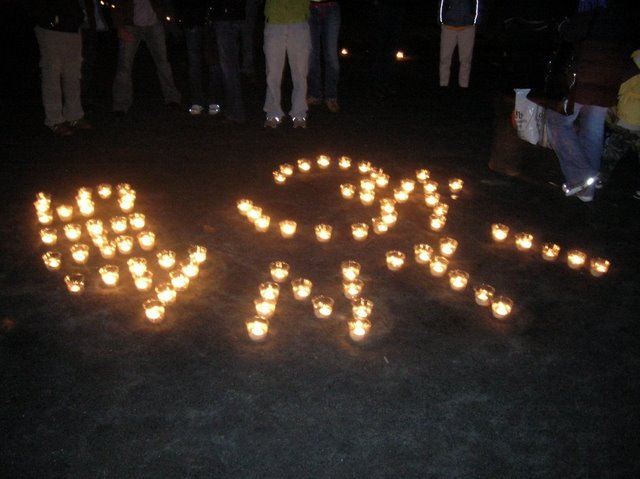
After the Puja was the highlight of the evening- Lighting up the entire big green with 1500 candles. Ambitious as it was, the volunteers were plentiful so all went well. The scene at big green after we lighted up all the diyas was breathtaking. The pics which I have put are dark in comparison. Forgive my photography.

From the big green we went to the Collis center for the dinner. The dinner was completely prepared by the Indian families in the area (without any catering help). I am extremely grateful to them for the REAL INDIAN FOOD I've had today. I especially loved the gulabjamuns :-)

Actually our celebration began even before the puja, there was lunch at B's place. Amazingly B too had gone out on all cylinders to prepare lots of food for all of us. I enjoy these gatherings and the movies which inevitably follow. Today was Andaz apna apna. I need not say more.

HAPPY DIWALI!!!

Friday, October 20, 2006

The Namesake by Mira Nair

Confused?

The namesake is a movie based on the novel by Jhumpa Lahiri. The movie is going to hit the theaters in the spring next year. I was lucky to watch it the Hopkins Center. Mira Nair was being presented with the annual Dartmouth film award this year and the screening was a privilege.

As the trailers of the movie say, it IS a loving adaptation of the novel. I found the book great and over the last few days I have been watching a few Mira Nair movies. In Monsoon wedding and Salaam Bombay (the ones I've seen), I was awed by the richness of the visuals. The tension and emotions just beneath the surface, which the characters could all but express, were the qualities which, as I think of them now emerge to me.

The Jhumpa Lahiri book, according to me was as much about Ashima as it was about Gogol and in the end they both ended up finding their destinies. I am very glad that this facet of the novel has been retained in the movie and it stays true to the course. "Life in a foreign country can be difficult ", I've heard people say. Imagine being in a foreign land within a week of your marriage with the knowledge that this is going to be your home for a long long time, perhaps forever.

What do you do when you operate the Laundromat for the first time and don't know whom to ask for instructions? How do you prepare that "hot mix" when none of the ingredients are at hand? What would you do when your husband is not there during your labor? In short how do you continue living? Tabu as Ashima rocks in the movie and it is pleasantly surprising to hear her English with an unmistakable Indian accent even after living as a first generation immigrant for so long. What is the big deal??

The confusion and a crisis of identity for Gogol are according to me very stereotypical. But the way this ABCD carves out his life is interesting. Tired of living a second hand life, everything becomes clear when in the end he says- “I know I am supposed to feel utterly devastated, but I actually feel free for the first time in my life”. That is the thing with life. You find your happiness in the most unexpected of things.

Now I realize I have got all my feelings for the novel and movie all mixed up and this post has been as much about the book as it has been about the movie.

“For our loving parents, who gave us everything”